الوضع الليلي


 7:42:19
  2019-09-05
  1455
1455
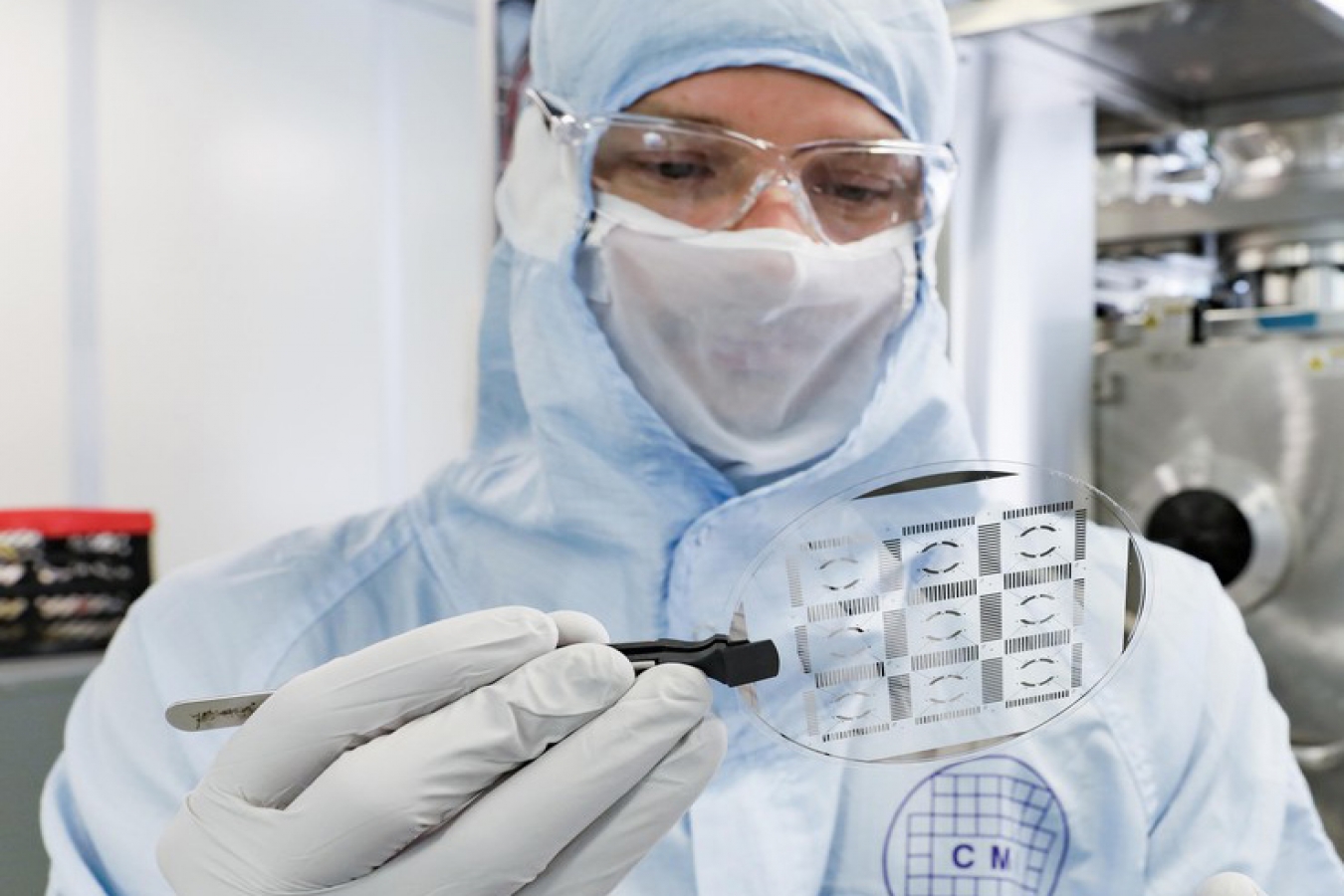
The electrical activity of cardiomyocytes and other excitable cells such as neurons is studied using a number of techniques. To get details about the action potentials within the interior of the cell requires either forcefully pushing microelectrodes through the cellular barrier or using electroporation, a high voltage technique that makes temporary openings in the membranes. Sticking electrodes carefully through springy cell membranes is a hit and miss process and electroporation is only effective for very short periods of time in many cases.
Now, researchers from Swiss Federal Institute of Technology Lausanne and the University of Bern in Switzerland have developed a new technique that doesn’t require electroporation yet delivers and positions electrodes carefully and accurately through membranes and inside cells.
“By reworking the geometry and materials, we developed an electrode that penetrates the cell membrane unassisted, thus eliminating the need for electroporation,” said Benoît Desbiolles, lead author of the study appearing in journal Nano Letters. “We also drew on previous research by our lab, which shows that mimicking the cell membrane stabilizes the cell-electrode interface.”
The technology comes in the form of tiny chips that can be strung together into arrays to study how groups of cells communicate and what goes inside individual cells during such communications.
The team named their device a “nanovolcano,” because it has a rim like a crater, which is made of gold and is the size of a cellular membrane. Inside the volcano is a platinum electrode that, when a cell is placed on the volcano and allowed to settle, protrudes through the membrane and ends up inside the cell. This allows the cell to maintain its overall structure and not be squeezed or poked harshly.
“For electrophysiologists like me, this technology is something of a dream come true,” says Stephan Rohr, one of the study authors. “As well as measuring the action potential of individual cells, we can now study how propagating action potentials change their shape depending on the tissue structure and pathological conditions. That knowledge is vital for a deeper understanding of the mechanisms leading to potentially fatal cardiac arrhythmias.”
So far, the team has used the nanovolcanoes to study heart cells, but they also plan to use the same technology to record potentials from neurons as well.
Reality Of Islam |
|
MIT researc
Researchers
Researchers

New phononi
 9:3:43
2018-11-05
9:3:43
2018-11-05
10 benefits of Marriage in Islam
7:5:22
2019-04-08
benefits of reciting surat yunus, hud &
9:45:7
2018-12-24
advantages & disadvantages of divorce
11:35:12
2018-06-10
6:0:51
2018-10-16
2:13:43
2022-05-27
allah will not answer all your prayers
6:56:28
2022-01-01
2:33:4
2023-02-15
6:0:8
2023-03-19
9:39:36
2022-12-28
3:43:50
2022-11-05
1:34:8
2022-02-01
5:41:46
2023-03-18
| LATEST |
 HOME
HOME