الوضع الليلي


 3:28:59
  2023-07-19
  2887
2887
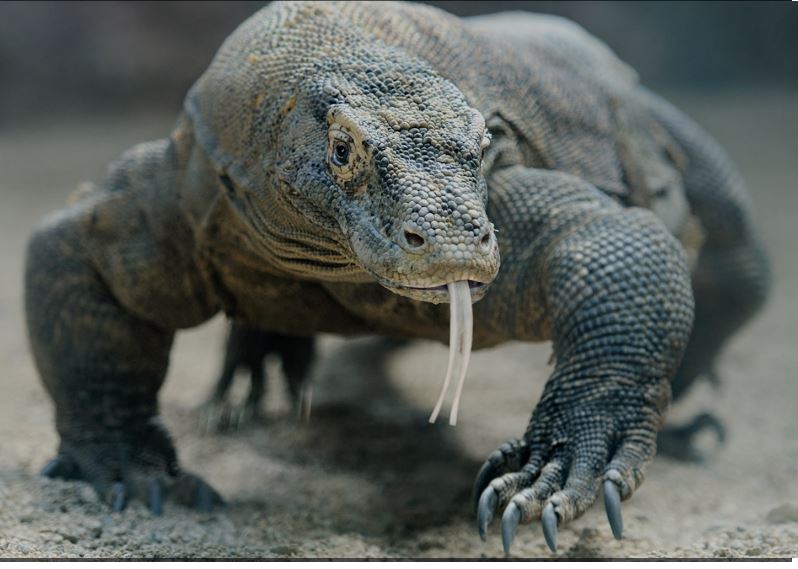
Reaching up to 10 feet in length and more than 300 pounds, Komodo dragons are the heaviest lizards on Earth. They have long, flat heads with rounded snouts, scaly skin, bowed legs, and huge, muscular tails.
Habitat
Komodo dragons have thrived in the harsh climate of Indonesia's Lesser Sunda Islands for millions of years. They prefer the islands' tropical forests but can be found across the islands. Though these athletic reptiles can walk up to seven miles per day, they prefer to stay close to home-rarely venturing far from the valleys in which they hatched.
Reproduction
Once a year, when they're ready to mate, female Komodo dragons give off a scent in their feces for males to follow. When a male dragon locates a female, he scratches her back and llicks her body. If she licks him back, they mate. Males also sometimes wrestle one another to earn mating rights. Pregnant females then lay about 30 eggs, which they bury in the earth until they hatch eight months later.
When there aren't any males around, female Komodo dragons have other means of reproducing: As they have both male and female sex chromosomes, female dragons can reproduce asexually in a process called parthenogenesis.
Diet
As the dominant predators on the handful of islands they inhabit, Komodo dragons will eat almost anything, including carrion, deer, pigs, smaller dragons, and even large water buffalo. When hunting, Komodo dragons rely on camouflage and patience, lying in wait for passing prey. When a victim ambles by, the dragon springs, using its sharp claws, and serrated, shark-like teeth to eviscerate its prey.
Feeding
The Komodo dragon has venom glands loaded with toxins that lower blood pressure, cause massive bleeding, prevent clotting, and induce shock. Dragons bite down with serrated teeth and pull back with powerful neck muscles, resulting in huge gaping wounds. The venom then quickens the loss of blood and sends the prey into shock.
Animals that escape the jaws of a Komodo will only feel lucky briefly. Dragons can calmly follow an escapee for miles as the venom takes effect, using their keen sense of smell to home in on the corpse. A dragon can eat a whopping 80 percent of its body weight in a single feeding.
Threats to survival
While asexual reproduction does allow female Komodo dragons to replenish their population-an evolutionary advantage-it has a significant drawback: This reproduction process only results in sons. The dearth of other females within a population has led to evidence of inbreeding. The reptile's reluctance to stray far from home exacerbates the issue as the species' population declines and fragments.
Humans have also posed a threat to the Komodo dragon's survival. People have burned the Komodo dragon's habitat to clear it for other uses, while poachers target this reptile and its prey. Tourists, too, offer food handouts and disrupt the dragons' mating process-which led the government of Indonesia to consider a temporary closure of Komodo Island, one of several on which they're found, to tourism. But tourists are also important to conservation efforts, as the economic boost they provide incentives to locals to help protect the Komodo dragon.
Conservation
In 1980, Indonesia established Komodo National Park to protect the Komodo dragon and its habitat. This 700-square-mile refuge is also home to species such as the orange-footed scrub fowl and Timor deer, as well as a rich marine environment supporting whales, dolphins, sea turtles, sharks, corals, sponges, manta rays, and more than a thousand species of fish. Now a UNESCO World Heritage site, Komodo National Park has established patrols to prevent poaching. It also works with local
communities to build awareness of the species and the importance of protecting it.
Reality Of Islam |
|

Keeping sil
Two experim

Changing a
Plants are
 9:3:43
2018-11-05
9:3:43
2018-11-05
10 benefits of Marriage in Islam
7:5:22
2019-04-08
benefits of reciting surat yunus, hud &
9:45:7
2018-12-24
advantages & disadvantages of divorce
11:35:12
2018-06-10
6:0:51
2018-10-16
8:4:21
2022-01-08
2:2:13
2022-10-08
7:6:7
2022-03-21
1:16:44
2018-05-14
5:57:34
2023-03-18
2:33:4
2023-02-15
8:25:12
2022-03-09
5:41:46
2023-03-18
| LATEST |
 HOME
HOME