الوضع الليلي


 7:29:40
 2023-09-05
 1784
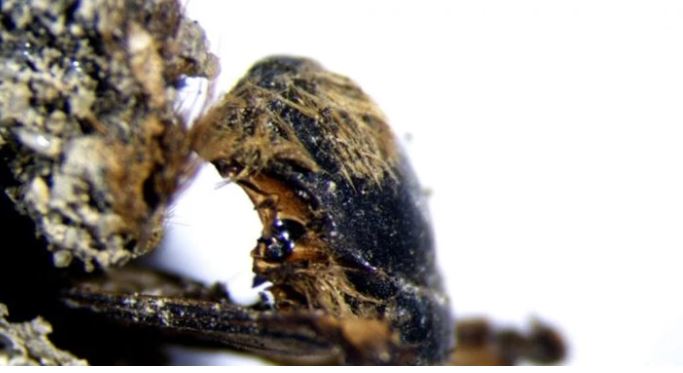
Archaeologists from the University of Lisbon, Portugal, discovered hundreds of mummified wild bee insects inside 3,000-year-old cocoons during excavations on the coast of Odemira, Portugal.
Papers in Palaeontology notes that the fossilized bee cocoons were formed as a result of a very rare mineralization process, as the insect's exoskeleton consisting of the organic chitin compound quickly decomposes.
According to scientists, a sharp drop in night temperatures at the end of winter, or floods that lasted for a long time outside the rainy season in the region, may lead to mummification of bees.
Thanks to the good condition of these fossils, scientists were able to identify the sex of bees and even pollen particles, and it was found that more than 45 percent of the pollen belonged to one type of flower.
The researchers discovered that the interior of the cocoons is covered with complex strands of organic polymer.
The researchers point out that these bees belong to the genus (Eucera), which nests in the ground, and is one of about 700 species of bees that live on the Portuguese mainland.
Reality Of Islam |
|

Keeping sil
Two experim

Changing a
Plants are
 9:3:43
2018-11-05
10 benefits of Marriage in Islam
7:5:22
2019-04-08
benefits of reciting surat yunus, hud &
9:45:7
2018-12-24
advantages & disadvantages of divorce
11:35:12
2018-06-10
6:0:51
2018-10-16
8:21:9
2018-06-21
11:34:48
2022-06-29
7:34:7
2023-02-28
6:14:17
2018-06-21
7:26:19
2022-04-08
11:11:59
2023-02-01
6:0:8
2023-03-19
5:41:46
2023-03-18
| LATEST |
 HOME