الوضع الليلي


 8:46:29
 2024-03-19
 1853
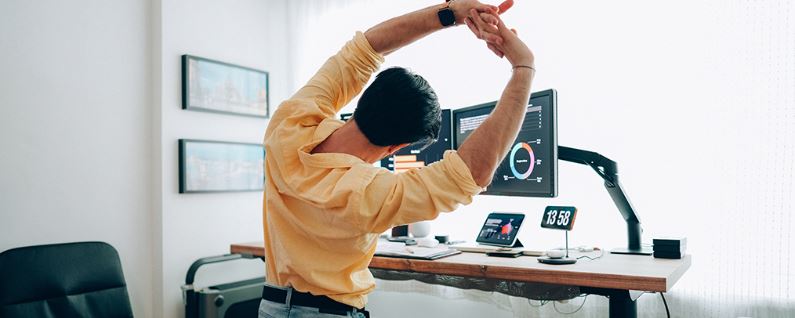
Advances in technology in recent decades have obviated the need and desire for humans to move. Many of the world's population sit for long periods throughout the day, whether in front of a computer at work or in front of a TV at home.
Given that the human body is made to move, all this sitting is clearly bad for our health. A new study from the University of California, San Diego (UCSD), confirmed this – and then some.
A total of 5,856 female participants aged 63 to 99 years were asked to wear an activity monitor on their hip for seven days at the start of the study. The researchers then followed them for a decade, during which 1,733 participants died.
The researchers used artificial intelligence to work out from the activity monitor how much time the participants were sitting and then linked this to their risk of death. The data showed that participants who sat more than 11 hours a day had a 57 percent higher risk of dying during the study period than those who sat less than nine and a half hours a day.
But regular exercise will undo the health risks of sitting too much, right? Not according to the UCSD study. The risk of an early death was still there even with higher amounts of moderate-to-vigorous exercise. A 2019 study also found that higher amounts of exercise didn't undo the risk of diseases such as type 2 diabetes, heart disease and stroke that come with sitting too much.
However, a study from Australia found that doing between 9,000 and 10,500 steps each day lowered the risk of premature death, even in people who sat a lot.
The contradictory findings could be explained by the activity monitors being worn on the hip in the UCSD study and on the wrist in the Australian study, which might lead to different estimates of sitting time.
The Australian study also didn't use any special software in the activity monitor data to work out when participants were sitting or standing, meaning that standing would have been incorrectly picked up as sitting. For example, if a participant stood still for half an hour, this would be picked up as half an hour of sitting. This could mean that the Australian study underestimated the time its participants spent sitting.
The evidence from the UCSD study looks to be better, highlighting the need to sit less. Current guidelines from the World Health Organization support this, recommending that adults should limit the amount of time sitting and break up long periods of sitting.
So how much sitting is too much? The UCSD study says 11 hours per day. Other research says just seven hours each day could be too much. There is lots of research too, that shows you shouldn't sit for longer than 30 minutes in one go as this can increase your blood sugar levels and blood pressure.
So what can you do to avoid sitting for long periods?
A sit-stand desk could help if you're an office worker. Or you could get up and move around between job tasks or while on a call. At home, you could stand up during TV ad breaks or while the kettle is boiling. Some smart devices and wearables buzz if you have been sitting for too long as well.
But what if you can't stand or walk? A 2020 study found that small bursts of arm exercise (for example, two minutes every 20 minutes) lowered blood sugar levels in wheelchair users. As long as you are doing something that means you aren't sitting still, there are health benefits to be had.
Reality Of Islam |
|

Keeping sil

Two experim

Changing a

Plants are
 9:3:43
2018-11-05
10 benefits of Marriage in Islam
7:5:22
2019-04-08
benefits of reciting surat yunus, hud &
9:45:7
2018-12-24
advantages & disadvantages of divorce
11:35:12
2018-06-10
6:0:51
2018-10-16
4:2:19
2022-10-10
7:6:7
2022-03-21
9:50:37
2023-02-28
10:35:40
2022-05-26
10:47:11
2022-11-22
2:13:43
2022-05-27
6:14:17
2018-06-21
5:41:46
2023-03-18
| LATEST |
 HOME