الوضع الليلي


 6:5:27
  2024-04-13
  2126
2126

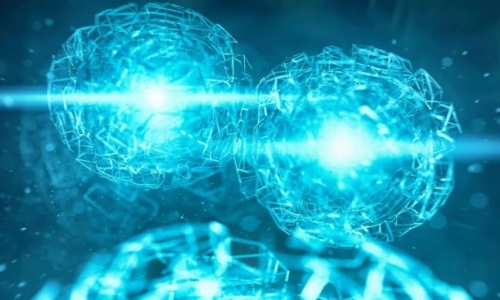
Scientists have discovered a remarkable new way to destroy cancer cells. Stimulating aminocyanine molecules with near-infrared light caused them to vibrate in sync, enough to break apart the membranes of cancer cells.
Aminocyanine molecules are already used in bioimaging as synthetic dyes. Commonly used in low doses to detect cancer, they stay stable in water and are very good at attaching themselves to the outside of cells.
The research team from Rice University, Texas A&M University, and the University of Texas, said the new approach is a marked improvement over another kind of cancer-killing molecular machine previously developed, called Feringa-type motors, which could also break the structures of problematic cells.
"It is a whole new generation of molecular machines that we call molecular jackhammers," said chemist James Tour from Rice University, when the results were published in December 2023.
"They are more than one million times faster in their mechanical motion than the former Feringa-type motors, and they can be activated with near-infrared light rather than visible light."
The use of near-infrared light is important because it enables scientists to get deeper into the body. Cancer in bones and organs could potentially be treated without needing surgery to get to the cancer growth.
In tests on cultured, lab-grown cancer cells, the molecular jackhammer method scored a 99 percent hit rate at destroying the cells. The approach was also tested on mice with melanoma tumors, and half the animals became cancer-free.
The structure and chemical properties of aminocyanine molecules mean they stay in sync with the right stimulus – such as near-infrared light. When in motion, the electrons inside the molecules form what's known as plasmons, collectively vibrating entities that drive movement across the whole of the molecule.
"What needs to be highlighted is that we've discovered another explanation for how these molecules can work," said chemist Ciceron Ayala-Orozco from Rice University.
"This is the first time a molecular plasmon is utilized in this way to excite the whole molecule and to actually produce mechanical action used to achieve a particular goal – in this case, tearing apart cancer cells' membrane."
The plasmons have an arm on one side, helping to connect the molecules to the cancer cell membranes while the movements of the vibrations bash them apart. It's still early days for the research, but these initial findings are very promising.
This is also the kind of straightforward, biomechanical technique that cancer cells would find it hard to evolve some sort of blockade against. Next, the researchers are looking at other types of molecules that can be used similarly
"This study is about a different way to treat cancer using mechanical forces at the molecular scale," said Ayala-Orozco.
Reality Of Islam |
|
Keeping sil
Two experim
Changing a
Plants are
 9:3:43
2018-11-05
9:3:43
2018-11-05
10 benefits of Marriage in Islam
7:5:22
2019-04-08
benefits of reciting surat yunus, hud &
9:45:7
2018-12-24
advantages & disadvantages of divorce
11:35:12
2018-06-10
6:0:51
2018-10-16
8:39:51
2022-09-23
2:42:26
2023-02-02
2:34:48
2022-01-18
6:0:8
2023-03-19
2:33:4
2023-02-15
allah will not answer all your prayers
6:56:28
2022-01-01
10:47:11
2022-11-22
5:41:46
2023-03-18
| LATEST |
 HOME
HOME