الوضع الليلي


 10:48:4
 2024-06-23
 2263

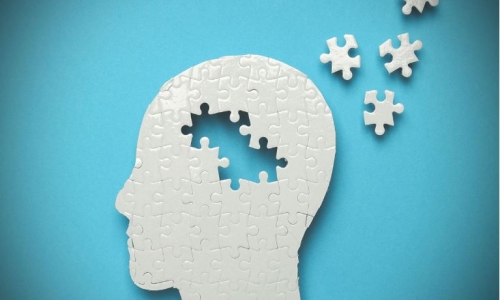
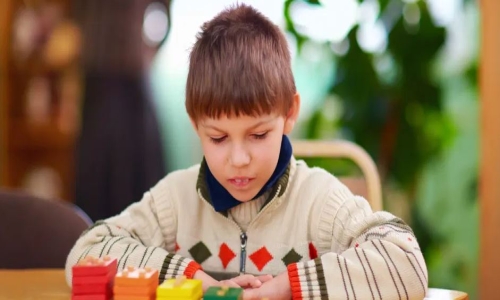
Some people with autism spectrum disorder experience milder symptoms, but others with more 'profound' cases face significant challenges with social, language, and cognitive skills. Sometimes, lifelong supportive care is needed.
A new study of mini-brains developed in the lab gives crucial insights into the biological foundations behind this puzzling disparity in autism, which could help us better understand and manage the diverse neurological condition.
"The differences in the embryonic origins of these two subtypes of autism urgently need to be understood," says neuroscientist Eric Courchesne from the University of California San Diego.
"That understanding can only come from studies like ours, which reveals the underlying neurobiological causes of their social challenges and when they begin."
This research, carried out by an international team of scientists, involved the use of induced pluripotent stem cells (iPSC), which can be reprogrammed into any kind of cell, safely taken from the blood of 10 toddlers with autism and 6 controls without the condition.
These iPSCs were grown into brain cortical organoids or BCOs, which are simplified 3D models of brain structures. Scientists use these organoids to study what's going on in the body in place of live organs – which obviously can't be removed.
The crucial finding of the study was that the 'mini-brains' using iPSCs from autistic kids grew to be around 40 percent larger compared with the neurotypical controls.
In addition, larger sizes and faster growth in the BCOs were associated with more severe types of autism, offering insight into how autism develops in the very early stages of brain formation.
"We found the larger the embryonic BCO size, the more severe the child's later autism social symptoms," says Courchesne.
"Toddlers who had profound autism, which is the most severe type of autism, had the largest BCO overgrowth during embryonic development. Those with mild autism social symptoms had only mild overgrowth."
The researchers found that overgrowth in the BCOs also matched overgrowth in the social parts of the brain of the children with more severe autism, who showed less of a response to social stimulation.
"Notably, these toddlers with profound autism and enlarged BCOs had substantially enlarged primary auditory and somatosensory cortices," write the researchers in their published paper, "a finding that highlights and helps explain sensory and social attention issues."
Along with the many complex factors that contribute to autism, some form of overstimulation in brain growth may be involved, even at the embryonic stage, and researchers can now investigate this further.
Our understanding of autism, and how it affects the estimated 1 percent of the population with it – both positively and negatively – has improved massively in recent years. This research brings us closer to figuring out how it begins.
"By embryogenesis, the biological bases of two subtypes of ASD social and brain development – profound autism and mild autism – are already present and measurable," write the researchers.
"Future larger sample BCO studies will undoubtedly reveal still other subtypes."
Reality Of Islam |
|
Keeping sil
Two experim
Changing a
Plants are
 9:3:43
2018-11-05
10 benefits of Marriage in Islam
7:5:22
2019-04-08
benefits of reciting surat yunus, hud &
9:45:7
2018-12-24
advantages & disadvantages of divorce
11:35:12
2018-06-10
6:0:51
2018-10-16
2:2:13
2022-10-08
2:33:4
2023-02-15
8:30:23
2022-03-03
a hero waters thirsty wild animals
9:4:9
2022-01-06
2:42:26
2023-02-02
8:19:41
2018-06-21
11:34:48
2022-06-29
5:41:46
2023-03-18
| LATEST |
 HOME