الوضع الليلي


 2:10:10
  2025-01-23
  1490
1490
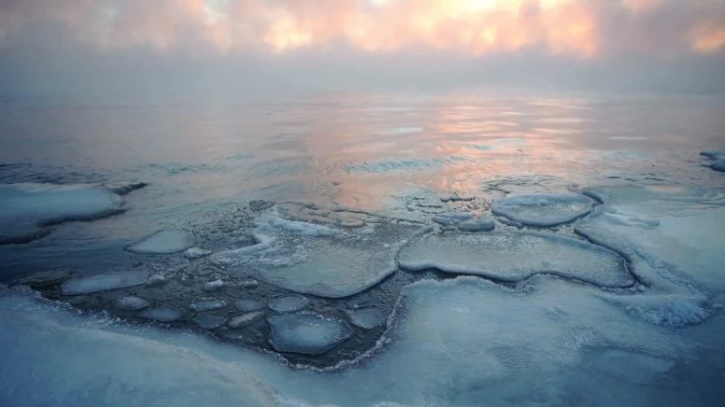
A University of Bristol study found that 91% of Svalbard’s glaciers have significantly shrunk since 1985, losing over 800 km².
A recent study has highlighted the dramatic shrinkage of glaciers in a global warming hotspot over the past 40 years, with the most significant losses occurring in recent years.
Conducted by researchers at the University of Bristol and published in Nature Communications, the study reveals that 91% of glaciers in Svalbard, a Norwegian Arctic Archipelago, have experienced substantial retreat. Since 1985, the glaciers have collectively lost over 800 square kilometers of ice at their margins.
The study also discovered that 62% of the glaciers display seasonal cycles of calving – when large chunks of ice break away due to higher ocean and air temperatures.
Lead author Dr. Tian Li, Senior Research Associate at the University’s Glaciology Centre, said: “The scale of glacier retreats over the past few decades is astonishing, almost covering the entire Svalbard. This highlights the vulnerability of glaciers to climate change, especially in Svalbard, a region experiencing rapid warming up to seven times faster than the global average.”
AI-Powered Analysis Unveils Detailed Patterns of Glacier Loss
The research team deployed Artificial Intelligence (AI) to quickly identify glacier patterns across large areas. Using a novel AI model, they analyzed millions of satellite images capturing the end positions of glaciers across the entire Svalbard.
The findings provide an unprecedented level of detail into the scale and nature of glacier loss in this region. The biggest spike in glacier retreats was detected in 2016, when the calving rates were double the average between 2010 and 2015, in response to extreme warming events.
“This was likely caused by a large-scale weather pattern called atmospheric blocking that can influence atmospheric pressures,” Dr. Li said.
“With the increasing frequency of atmospheric blocking and ongoing regional warming, future retreats of glaciers are expected to accelerate, resulting in greater glacier mass loss. This would change the ocean circulation and marine life environments in the Arctic.”
Svalbard is one of the fastest-warming places on Earth. The low altitude of the archipelago’s ice fields and geographical location in the high North Atlantic make it especially sensitive to climate change.
Co-author Jonathan Bamber, Professor of Glaciology at the University of Bristol, said: “Glacier calving is a poorly modeled and understood process that plays a crucial role in the health of a glacier. Our study provides valuable insights into what controls calving and how it responds to climate forcing in an area at the frontline of global warming.”
Reality Of Islam |
|

Keeping sil
Two experim

Changing a
Plants are
 9:3:43
2018-11-05
9:3:43
2018-11-05
10 benefits of Marriage in Islam
7:5:22
2019-04-08
benefits of reciting surat yunus, hud &
9:45:7
2018-12-24
advantages & disadvantages of divorce
11:35:12
2018-06-10
6:0:51
2018-10-16
7:32:24
2022-02-14
4:2:19
2022-10-10
8:25:12
2022-03-09
8:19:41
2018-06-21
7:26:19
2022-04-08
bahlool & the throne of haroun rashid
8:20:35
2018-06-21
10:55:53
2022-06-13
5:41:46
2023-03-18
| LATEST |
 HOME
HOME