Glides
A distinction between /w/ and /hw/ was robust in New Zealand into the 1960s, distinguishing Wales from whales and witch from which, but now seems to be receding quickly. It has gone from the North Island except in a few conservative individuals and is in retreat in the South Island. It may end up being retained as a regional marker, though this currently seems unlikely.
/w/ and /j/ are strongly devoiced following stressed-syllable-initial [p, t, k], and we could transcribe  for tweak, queue, pewter. Similar devoicing of /j/ is found in words like huge, hue
 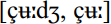 .
.
There is often a rather strong palatal or labial-velar glide following respectively a front or back vowel in hiatus with another vowel. So in examples such as see it, allowing, doing, happiest there may be a stronger glide element than would be expected in RP, although there is still a distinction to be drawn between the glides in, for example, do one and do unlikely things.
Yod-dropping is variable in New Zealand English. After /r/ in words like rule, /j/ has vanished, as elsewhere in English. After /l/, in words like lewd, illuminate, it is extremely rare, though it is retained where the relevant syllable does not carry primary stress in words like prelude. After /θ/ in words like enthuse, yod is very rare. After /s, z/ the presence or absence of yod is to some extent determined by the environment. In Zurich, which provides the only potential case of  the /j/ is variable (possibly reflecting the German [y] pronunciation of the vowel). After most /s/ types it has virtually vanished: for example Susan would never have a /j/ and super(intendent), superstitious etc. have /j/ only extremely rarely from very conservative speakers (these were still occasionally heard fifteen years ago, but have become much rarer). In the set of words including assume, consume, presume, resume there are many competing pronunciations. If we take assume as a model, we can find any of
  , and the same variants arise for the other words in this set. The first of these is perceived as being the most standard, but the others are common. These words are the only place where /ʃj/ clusters can arise. The clusters /tj/ and /dj/ usually coalesce to affricates, but there are a few exceptional words: tuna is usually
  whether the large salt-water fish or the eel (from Maori tuna) is intended. The orthography <tu> never gives rise to
  pronunciations in Maori words. Yod-dropping is variable after /n/, especially in a few lexemes including new (particularly in New Zealand, Air New Zealand and similar high frequency collocations), nude and nuisance. The orthography <nu> in Maori words is nevertheless sometimes pronounced as
  .
.
The glide /w/ is also regularly dropped in the words quart and quarter, with the result that quart and court/caught become homophonous. It is not clear whether this is lexical or due to the phonological environment, since there are so few words which fit this pattern.








