الوضع الليلي


 3:53:36
  2023-10-28
  1762
1762
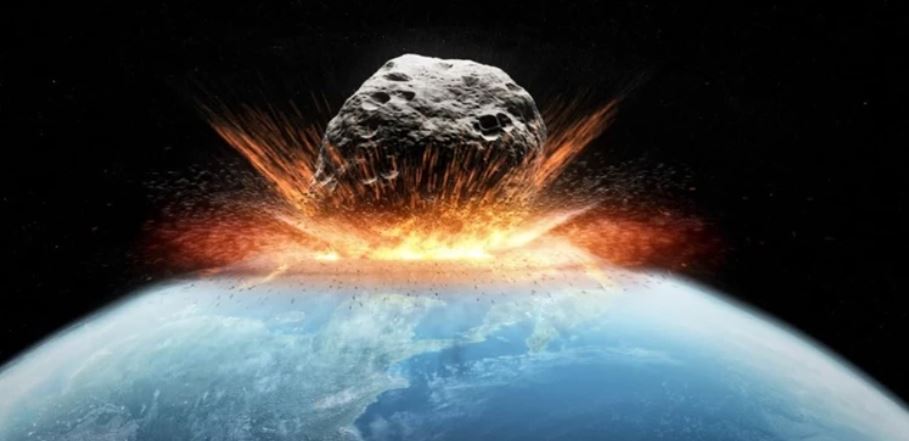
Since the Hayabusa2 return mission brought samples from the Ryugu asteroid to Earth in 2020, a team of experts from around the world has been examining them to learn more about the origins of our solar system.
Carbon meteorites, such as the Winchcombe meteorite, which fell to Earth in Gloucestershire in 2021, are an extremely rare group of meteorites, which are known to contain organic materials and amino acids that are components of life, and among the most primitive and pure materials in the solar system. It could provide unique information about where water and the building blocks of life form, and what planets they are made of.
In the recent study, published on October 20 in the journal Science Advances, the team concluded that Ryugu, now a near-Earth object, was among a group of asteroids known as Cb-type, which formed billions of kilometers from Earth, towards the edge of impact. The Sun, in a region of space like the Kuiper Belt, or perhaps deeper in space.
Professor Sarah Russell, senior researcher at Gloucestershire Museum, who participated in the study, said: “It is only in the last decade that we have begun to estimate the extent to which objects in the solar system can move towards and away from the sun.”
She added: “While it is generally accepted that material from the outer solar system could have been moved inward by giant planets, this is one of the first studies to suggest that the asteroid belt contains material that originated as far away as Neptune. This gives us an additional group "It is important to develop our knowledge of how the solar system was formed."
The group set out to investigate whether Cb asteroids, such as Ryugu, could be the “parent body” of a rare group of meteorites known as CI chondrites. To which belongs the Ivuna meteorite, which fell in Tanzania in December 1938, and was later divided into several specimens, one of which is located in the Natural History Museum (NHM) in London.
It is noteworthy that these "chondrites" are stony meteorites containing carbon that retain the original primitive chemistry of the formation of the solar system more than four billion years ago. They are known to contain water - one of the main components of life.
Meteorites are key to helping us understand the solar system, but their scientific value is limited if their location of formation is unknown.
By determining their source, it could reveal more answers about the early history of the solar system and shed more light on how life arose on Earth.
The results indicate that both Ryugu and Ifuna originate from the same region of space, and it cannot be ruled out that they could share the same "mother body" material.
Professor Russell continues: “By comparing the forms of iron in both asteroids and meteorites, we learned that Ryugu is a remarkably similar match to the CI chondrite meteorites. These are the rarest type of carbon meteorites.”
Reality Of Islam |
|
MIT researc

Researchers

Researchers

New phononi
 9:3:43
2018-11-05
9:3:43
2018-11-05
10 benefits of Marriage in Islam
7:5:22
2019-04-08
benefits of reciting surat yunus, hud &
9:45:7
2018-12-24
advantages & disadvantages of divorce
11:35:12
2018-06-10
6:0:51
2018-10-16
4:25:57
2023-02-11
7:34:7
2023-02-28
9:39:36
2022-12-28
10:35:40
2022-05-26
11:2:27
2022-10-06
6:14:3
2023-01-18
5:58:12
2021-12-18
5:41:46
2023-03-18
| LATEST |
 HOME
HOME