الوضع الليلي


 12:10:54
  2026-04-13
  1392
1392
Antarctic sea ice decline in 2015 was caused by weakening ocean stratification and strong storms that mixed warm deep water upward, melting ice quickly.
Antarctic sea ice is vital to both the region’s ecosystem and its physical environment, as well as the broader Southern Ocean. By reflecting sunlight and limiting heat exchange between the ocean and atmosphere, it helps regulate weather and climate. Understanding what controls its size and spread is essential for improving climate forecasts and models.
Unlike the Arctic, where sea ice has steadily declined since satellite tracking began, Antarctica has followed a different pattern. Its sea ice gradually expanded over several decades, then dropped sharply in late 2015. Since then, it has shown large year-to-year swings. A study led by the University of Gothenburg, published in Nature Climate Change, examines the causes behind this shift.
Storm-Driven Ice Loss and Ocean Layer Disruption
“There was a protective layer of cold water beneath the sea ice in Antarctica that prevented warmer deep water from rising and melting the ice from below. But during the winter of 2015, storms in the Southern Ocean were unusually strong, reducing the cold-water protective layer effect and resulting in the sustained sea ice loss around Antarctica,” says Theo Spira, former doctoral student in oceanography at the University of Gothenburg and first author of the study.
Ocean layers form when water with different temperatures or salt levels does not mix easily, a process known as stratification. The cold Winter Water layer beneath the ice becomes fresher as sea ice forms and melts, strengthening this layering compared to the warmer, saltier water below.
This layered structure helped support the long-term growth of Antarctic Sea ice up to 2015. Over time, however, warming deep water caused the Winter Water layer to thin, reducing its ability to shield the ice from heat below.
Thinning Winter Water Layer and Rapid Melt
“With the help of almost two decades of observations, I can see that the Winter Water layer has thinned over large parts of the Southern Ocean, allowing the deep, warm water to approach the surface. The storms in 2015 stirred up the sea, and warmer water mixed with the cold-water layer; the protection disappeared, and the ice melted at record speed,” says Theo Spira.
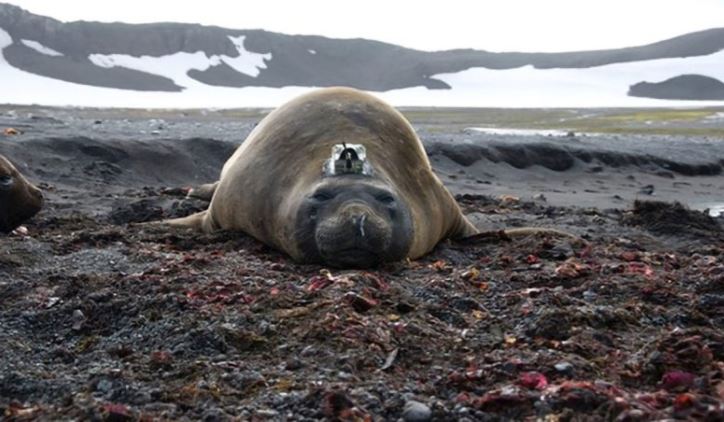
Studying the Southern Ocean is challenging due to its remote location. To gather data, researchers used autonomous marine robots to record temperature and salinity. They also equipped elephant seals with sensors that traveled with them on dives hundreds of meters (about 656 feet) deep. After about 10 months, the sensors detach from the animals.
“This is valuable because elephant seals live within and at the edge of the sea ice in Antarctica and can provide data on the stratification of the water there. Winter Water acts as a gatekeeper for heat exchange between the deep ocean and the surface, and by quantifying its role, my research identifies processes that are missing or poorly represented in today’s climate models,” says Theo Spira.
Reality Of Islam |
|

Keeping sil
Two experim

Changing a

Plants are
 9:3:43
2018-11-05
9:3:43
2018-11-05
10 benefits of Marriage in Islam
7:5:22
2019-04-08
benefits of reciting surat yunus, hud &
9:45:7
2018-12-24
advantages & disadvantages of divorce
11:35:12
2018-06-10
6:0:51
2018-10-16
10:43:56
2022-06-22
11:11:59
2023-02-01
9:42:16
2022-10-19
11:2:27
2022-10-06
4:26:43
2022-02-21
5:58:12
2021-12-18
1:34:8
2022-02-01
5:41:46
2023-03-18
| LATEST |
 HOME
HOME