0
EN
1
المرجع الالكتروني للمعلوماتية

Grammar

Tenses

Present

Present Simple

Present Continuous

Present Perfect

Present Perfect Continuous

Past

Past Simple

Past Continuous

Past Perfect

Past Perfect Continuous

Future

Future Simple

Future Continuous

Future Perfect

Future Perfect Continuous

Parts Of Speech

Nouns

Countable and uncountable nouns

Verbal nouns

Singular and Plural nouns

Proper nouns

Nouns gender

Nouns definition

Concrete nouns

Abstract nouns

Common nouns

Collective nouns

Definition Of Nouns

Animate and Inanimate nouns

Nouns

Verbs

Stative and dynamic verbs

Finite and nonfinite verbs

To be verbs

Transitive and intransitive verbs

Auxiliary verbs

Modal verbs

Regular and irregular verbs

Action verbs

Verbs

Adverbs

Relative adverbs

Interrogative adverbs

Adverbs of time

Adverbs of place

Adverbs of reason

Adverbs of quantity

Adverbs of manner

Adverbs of frequency

Adverbs of affirmation

Adverbs

Adjectives

Quantitative adjective

Proper adjective

Possessive adjective

Numeral adjective

Interrogative adjective

Distributive adjective

Descriptive adjective

Demonstrative adjective

Pronouns

Subject pronoun

Relative pronoun

Reflexive pronoun

Reciprocal pronoun

Possessive pronoun

Personal pronoun

Interrogative pronoun

Indefinite pronoun

Emphatic pronoun

Distributive pronoun

Demonstrative pronoun

Pronouns

Pre Position

Preposition by function

Time preposition

Reason preposition

Possession preposition

Place preposition

Phrases preposition

Origin preposition

Measure preposition

Direction preposition

Contrast preposition

Agent preposition

Preposition by construction

Simple preposition

Phrase preposition

Double preposition

Compound preposition

prepositions

Conjunctions

Subordinating conjunction

Correlative conjunction

Coordinating conjunction

Conjunctive adverbs

conjunctions

Interjections

Express calling interjection

Phrases

Sentences

Clauses

Part of Speech

Grammar Rules

Passive and Active

Preference

Requests and offers

wishes

Be used to

Some and any

Could have done

Describing people

Giving advices

Possession

Comparative and superlative

Giving Reason

Making Suggestions

Apologizing

Forming questions

Since and for

Directions

Obligation

Adverbials

invitation

Articles

Imaginary condition

Zero conditional

First conditional

Second conditional

Third conditional

Reported speech

Demonstratives

Determiners

Direct and Indirect speech

Linguistics

Phonetics

Phonology

Linguistics fields

Syntax

Morphology

Semantics

pragmatics

History

Writing

Grammar

Phonetics and Phonology

Semiotics

Reading Comprehension

Elementary

Intermediate

Advanced

Teaching Methods

Teaching Strategies

Assessment

قم بتسجيل الدخول اولاً لكي يتسنى لك الاعجاب والتعليق.

Postalveolar

المؤلف:  Richard Ogden

المصدر:  An Introduction to English Phonetics

الجزء والصفحة:  13-2

7-6-2022

1425

+

-

20

Postalveolar

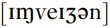
Postalveolar sounds are made just behind (‘post’) the alveolar ridge. There are four of these in English, [ʃ] and , the sounds spelt  in ‘ship’, [ʃip], and  in ‘invasion’,, and the sounds  as in ‘church’ and ‘judge’. It can be hard to feel the difference in place of articulation between alveolar and postalveolar sounds, but if you produce a [s] sound, then a [ʃ] sound, and suck air in immediately after each sound, you should feel that part of the roof of the mouth which goes cold and dry is further back for [ʃ] than for [s].

Special symbols for dentals and postalveolars only exist for the fricatives. If dental or postalveolar articulations need to be distinguished, this can be done using diacritics – characters which modify the basic value of letters, and are placed over or under simple letters. For [t], we use [t t t] respectively, where [-] marks ‘dental’, and [-] marks ‘retracted’ (i.e. further back), i.e. postalveolar.

Postalveolars are reported occasionally in dialects which are on their way to losing distinct [r] sounds. Hedevind (1967) reports a contrast between dentals/alveolars and postalveolars (transcribed [n, z, t] in pairs such as those below in a dialect from Dent (Cumbria, Northern England).

If you slowly move your tongue away from the alveolar ridge and slide it back along the roof of your mouth, you will feel a change in texture (it will get smooth and hard) as well as a distinct change in shape (it will feel domed). This domed part is known as the hard palate. (You may be able to curl your tongue even further back, when you will feel a change in texture again – it will feel soft – and it might feel a bit uncomfortable; this is the velum, or soft palate.)


اخر الاخبار

اشترك بقناتنا على التلجرام ليصلك كل ما هو جديد