Language and gender
Of all the findings of modern sociolinguistics, none can have been more intensely debated than what has become known as the sociolinguistic gender pattern (SGP), set out by Trudgill in the following terms:
Hypercorrection
Another meaning of hypercorrection, and a frequent source of language-based comedy in popular drama, is the over-extension of a rule learned by a social climber to a linguistic environment where it does not apply. Before British English speakers were as aware as they are today of each others’ regional accents, it was claimed, for example, that northern English speakers living in the south and aspiring to the prestigious RP accent would pronounce some words like butcher with the southern STRUT vowel, i.e. as 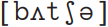 rather than
  , because they erroneously assumed that all instances of
  could be replaced by
  in RP. While this strategy works fine for come and rub, it does not for butcher or pull, where northerners and RP speakers have the same vowel.
Dramatists have seen comic potential in the propensity of Cockneys – traditional London English speakers – to drop h at the beginning of words. Fans of the cult 1960s TV adventure puppet show Thunderbirds will recall, for example, how Parker, an ex-jailbird now working as manservant to the aristocrat Lady Penelope, would attempt to use higher status speech by reinserting the lost initial h’s of Cockney English, usually in the wrong places, e.g. ‘I must apologize for the hunconventional entrance, m’Lady, but I ‘ad to happre’end ‘im some’ow’.
Trudgill is not, of course, claiming that women speak ‘better’ than men, nor, indeed, that men and women have different languages. Gender-based differences in speech, with the exception of those imposed by the grammar (for example, a male Russian says ja sidjel ‘I sat’ but a female would say ja sidjela), are generally a matter of more or less, with the genders using the same forms in different proportions. But women nonetheless consistently appear to use more prestige forms than men do. Macaulay’s (1976) data for the (i) variable in Glasgow, for example, suggest that women’s use of prestige variants corresponds broadly to that of men in the social class immediately above them:

Explanations for this remarkably consistent finding have appealed variously to women’s traditionally greater role in the rearing and education of children, to their purportedly greater need to assert status through language, given a generally subordinate social position, and to men’s greater subjection to workplace vernacular norms.
A self-evaluation test from the Norwich survey suggested that attitudinal factors may also play a part. At the end of interview, Trudgill told his informants that he would say some words in two different ways, and asked them to identify (a) the ‘correct’ pronunciation and (b) the pronunciation they themselves used most of the time. Informants had no difficulty recognizing that [tju:n] rather than [tu:n] was the standard pronunciation of tune, for example, and were generally accurate in the identification of their own usage (determined by Trudgill on the basis of the form they had used more than half the time in casual style in the recorded interview).
But an interesting pattern obtained among those who, according to the available data, answered the second question wrongly: here the over-reporters – those who thought they used the standard form more than they actually did – were mostly female, while the under-reporters – who used fewer vernacular forms than they thought they did – were mostly male, irrespective of social class. Trudgill suggested that many men genuinely believed they used these variants more than they did because, perhaps at a subconscious level since no deception seemed to be involved, they actually liked them, even though they were stigmatized low-status forms. These variants had covert prestige by virtue of their association with working-class speakers, the stereotypically ‘rough and tough’ nature of whose working lives was arguably more attractive to men than to women, who identified more strongly with overtly prestigious forms.








