Peer Assessment among Students in a Problem-Based Learning Format
Procedure
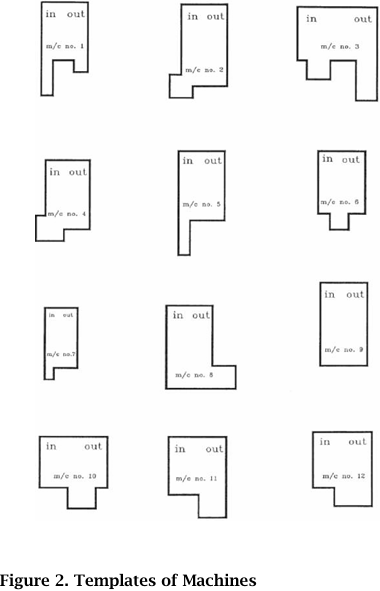
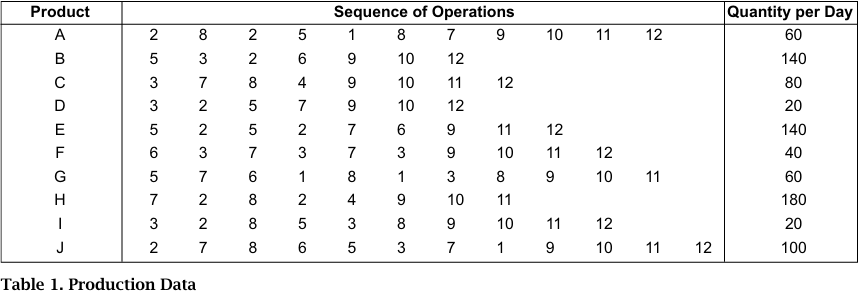
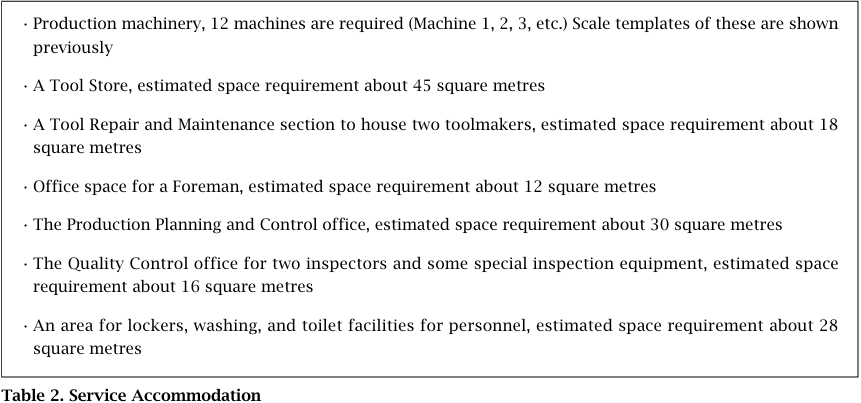
Firstly, a brief introduction to layout planning was given whereby typical objectives of layout planning were explained followed by some elementary layout planning techniques. The purpose of this introduction was to set the scene and provide students with just enough information to be able to recognize, define, and analyze the case without actually explaining to them what to do. They were then divided into groups of about four to five students per group and given the case. This was briefly described to them so as to facilitate a thought-provoking discussion in the class. (see Figure 1 - Layout Plan in possible problems, Figure 2 - Templates of Machines, Table 1 Production Data, and Table 2 - Service Accommodation).
After each group completed their layout, they submitted and presented their results to the rest of the class and the teacher briefly commented on the advantages and limitations of each layout plan. The teacher then used the case as a vehicle to explain and demonstrate some further layout planning techniques that could be used in determining solutions to such situations. Basically, these comprise of techniques for the design of flow lines and the use of Systematic Layout Planning. After making use of these, another solution to the same case is determined. This was referred to as the "Teachers Solution", not necessarily the best solution.
Each group then spent about five to ten minutes presenting their solutions and this included the teacher's comments on the relative advantages and limitations of each. It provided an excellent demonstrates that in real life there is seldom any "best" solution to an industrial problem, and in reality there will always be alternatives that can be considered. After emphasizing this, the teacher then briefly explained techniques that can be used to evaluate different alternatives. Some of which are Ranking, Paired Comparison, and Points Weighting.
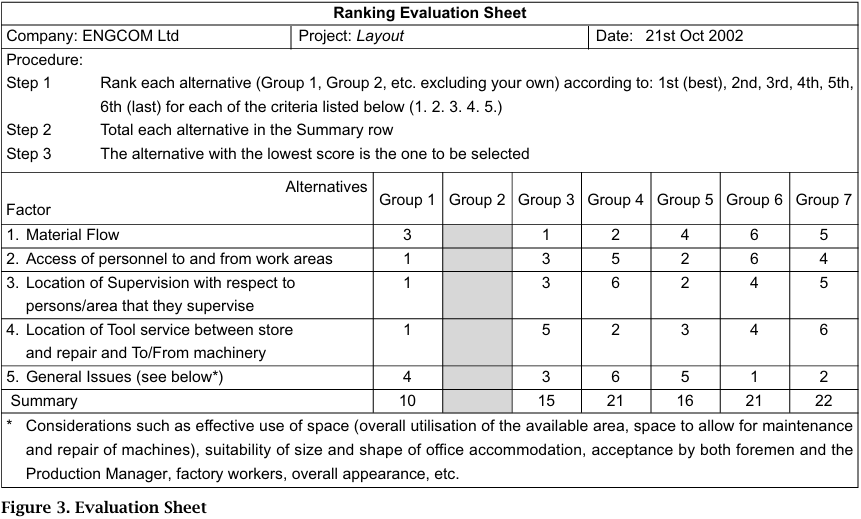
Students were then presented with the solution of other groups and asked to evaluate them using Ranking technique. This is not necessarily the preferred method but one that can be handled effectively within the time limitation set by the class. Using Ranking, a numerical score was used, i.e. 1 being highest, 2 being next and so on against five criteria that were considered to be suitable of this case study, namely:
• material flow
• access of personnel to and from work areas
• location of supervision with respect to the persons/ area they supervise
• location of tooling service between store/repair area and to/from machinery
• general issues such as space utilization, suitability of size/shape of office accommodation, acceptance by both foremen and the Production Manager, factory workers, overall appearance, etc.
The Evaluation sheet used for this is shown in Figure 3.
The results were then compiled so that all students can see all the results of all groups. The Summary sheet used for this is shown in Figure 1 in Peer Assessment among Students in a Problem-Based Learning Format Procedure Results. It has been found that there is a high degree of consistency whereby the stronger layouts are always ranked high and the weaker layouts ranked low. This demonstrates that students are able to recognize good solutions when they see them and there has never been any hint of confounding, i.e. some layouts ranked high by some groups and low by others. An example of a typical solution when eleven groups were involved is shown in Figure 2 in Peer Assessment among Students in a Problem-Based Learning Format Procedure Results. A typical time schedule for the whole exercise is shown in Table 1 in Peer Assessment among Students in a Problem-Based Learning Format Procedure Results.








