IDENTIFYING SIMILARITIES AND DIFFERENCES
Classroom Example
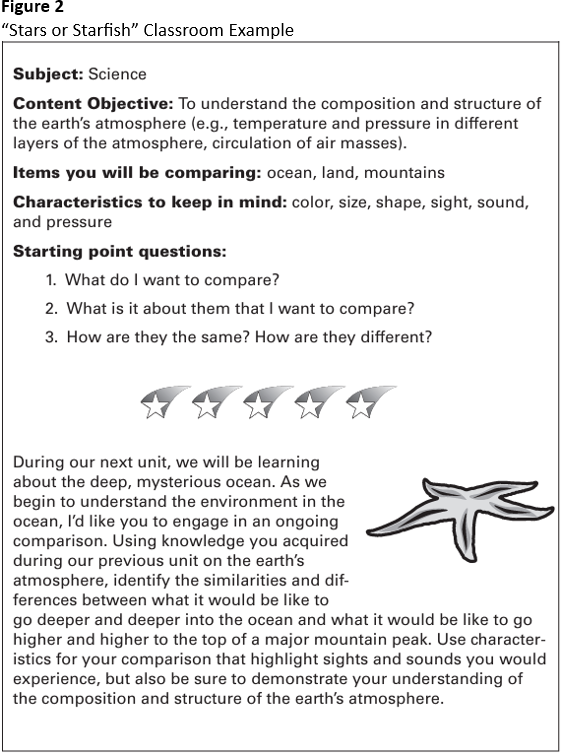
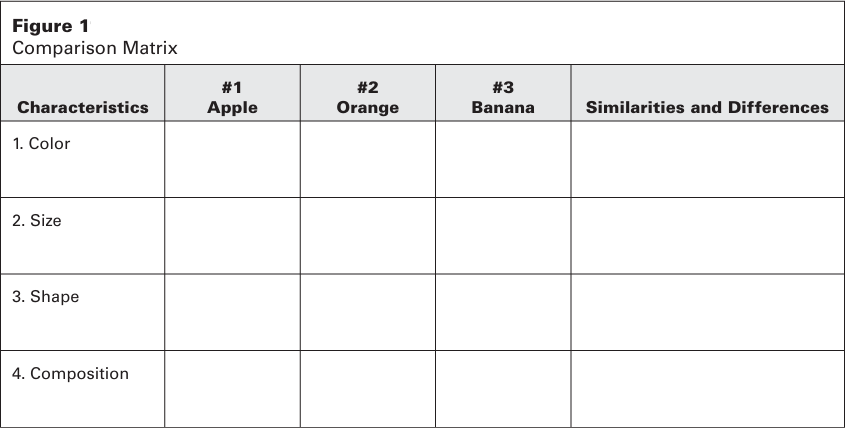
Figure 2 presents a real-life classroom example of an assignment dealing with similarities and differences. Figure 1 in summary presents an example of a completed comparison matrix to go along with the activity. As you adapt the lesson for ELLs, you will want to focus on the Word-MES formula.
Preproduction
Students will be building vocabulary (word selection): land, mountains, ocean, color words, and words to describe size.
Early Production
Students will be using modeled sentence starters when talking about similarities and differences.
Speech Emergence
Students will be expanding their language as they talk and write.
Intermediate and Advanced Fluency
Students will begin to “sound like a book” as they write their comparisons.
Being able to describe a word according to its attributes is one of the first strategies ELLs will use in defining words. Next, they will provide examples of the word and then use synonyms. It is not until the later stages of language acquisition that they will define a word in the formal way that English-dominant students do—in terms of a larger class to which it belongs (i.e., defining “belt” as a clothing accessory or “dresser” as furniture).