PROJECTION RULES
The projection rules of KF are a system of rules that operate on full grammatical descriptions of sentences and on dictionary entries to produce semantic interpretations for every sentence of the language. Projection rules are of two types; described informally, projection rules of type 1 (PR 1) operate on sentences formed without transformations or with obligatory transformations only; those of type 2 (PR2) operate on sentences formed by optional transformations. It is already anticipated in KF (p. 207) that if the syntactic theory of a language could be formulated without recourse to optional transformations, PR 2 could be eliminated. Since the publication of KF the possibilities of a syntax without optional transformations, singulary1 or generalized,2 have been shown to be real, so that the need for PR 2 no longer exists. Let us then consider the differences among various PR 1.
Projection rules in KF differ among each other according to (a) the conditions for their application and (b) their effect. We take up each factor in turn.
(a) The conditions are stated in terms of the grammatical status of constituent strings in a binary (i.e. two-constituent) construction. The specification of the grammatical status of strings in KF is, however, thoroughly eclectic. The terms ‘ noun ’ and ‘ article ’, to which the rules refer, are lexical categories given by the grammar; similarly, ‘verb phrase’, ‘noun phrase’, and ‘main verb’ are defined as non-lexical (preterminal) categories of the grammar. Such labels, on the other hand, as ‘ object of the main verb ’ and ‘ subject ’ have a different theoretical status in the syntax which KF takes for granted.3 Finally, such notions as ‘modifier’ and ‘head’, to which PR1 makes reference (p. 198), have no status in the theory at all; they beg a question in disguise and are probably undefinable without reference to semantics. Although KF gives no indication of the number of PRs in a language (n. 20), it would seem that the procedure would require as many PRs as there are binary constructions in the grammar. (No treatment for ternary constructions is proposed by KF.)
(b) The PRs differ in their effect, such effect being stated in terms of deletions of selection restrictions. Let us represent a construction as (21), where M and N are

lexical strings with their associated sets of syntactic and semantic markers, and  and v are their respective selection restrictions. In principle, there are four possible restrictions on the selections of the construction, A, as a whole.

A may retain the restrictions of both constituents (i), or of the left constituent (ii) or of the right constituent (iii); or it may be unrestricted (iv). In KF, projection rule 1 is a rule of type (22 iii); rule 3 is of type (22 ii); rules 2 and 4 are of type (22 iv). No rule of type (22 i) is cited, but there appears no reason to exclude its occurrence in principle.
In sum, the function of the KF projection rules is to classify all binary constructions, terminal as well as preterminal, of a grammar into four types according to the deletion or non-deletion of the selection restrictions of their right and left constituents. Except for the differential effects on selection restrictions, the power of all projection rules is the same: namely, to sum the paths of the constituents. Consequently, the classification of constructions by PRs could easily be shown within the categorial part of the syntax,4 so that no separate PR ‘ component ’ would be necessary.
Before attempting a radically new approach [ch. 3], we must still consider the position of deviant utterances in an explicit linguistic theory. Since KF touches on the problem only tangentially, we must on this point turn to certain other sources which are close to KF in spirit.
1 Katz and Postal (1964: 31-46).
2 Chomsky (1965).
3 A way of defining these syntactic functions derivatively has now been described by Chomsky (1965).
4 For example, instead of using ‘ + ’ in all branching rules (A → M + N), we might restrict the plus to rules of types (22 i) and use 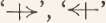 and ‘<—|—>’,respectively, for rules of type <22ii-iv>(22ii-iv).








